
You’re Not a Loser for Refusing to Oversell Yourself in Academia
OpenAI. (2026). ChatGPT (Sept 10 version) [Large language model]. https://chat.openai.com/chat
By Moustafa Laymouna
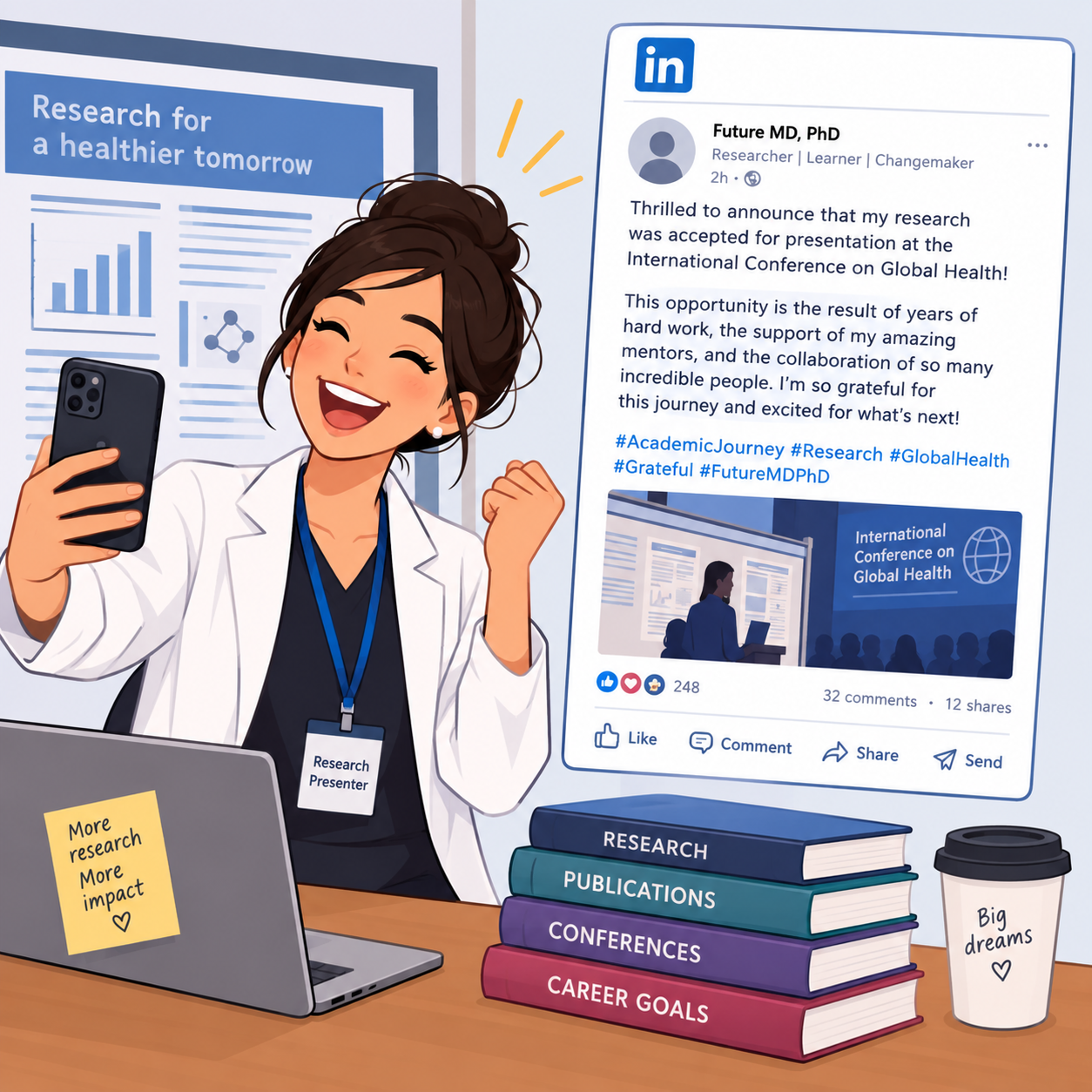
After a few years in academia, it has become increasingly clear to me that academia no longer expects researchers to be just researchers, but rather to operate like small startups or influencers, treating their research projects as a production line, maintaining a constant online presence, publicly celebrating every routine achievement, and turning their entire career into a marketable academic brand. All too often, the genuine, arduous, slow, and detailed scientific work begins to seem less important than the performance surrounding it.
I have seen many researchers privately admitting to being exhausted by this constant pressure to appear productive, successful, and exceptional all the time, but few say so openly, because academia has gradually succeeded in transforming overselling ourselves into an almost fundamental standard of professionalism [1,2]. Thus, overselling yourself is no longer an added skill, but a prerequisite for remaining visible or “faking it until you make it” within academia.
In academia, sometimes it feels as though we are part of a fair, constantly showcasing ourselves, our achievements, our productivity, and our influence.
Everyone is trying to publish more, to stand out more, to attract more attention, sometimes without questioning whether any of it is actually having a real scientific or societal impact in the first place. I see us all falling into the trap of constantly seeking more attention, more likes, more comments, and more engagement on LinkedIn and our social media accounts, all in the name of science. The pressure to maintain visibility has become so commonplace that overselling oneself is starting to seem less like a tool for communication and more like a requirement for survival in academia.
The problem is not scientific communication itself; science should naturally be understandable and accessible to everyone, and it is essential that researchers can explain their work to the community and the societies they serve. The real problem arises when visibility becomes detached from substance, and when the ability to market oneself becomes more important than the work itself. As a result, a troubling culture has emerged where scientific caution is interpreted as a lack of self-confidence, and intellectual humility is seen as a lack of competitiveness. Early-career researchers are told, directly or indirectly, that if they do not promote themselves and their careers, they will disappear academically. In such an environment, silence is easily equated with failure, and immense pressure is exerted to exaggerate the significance, novelty, or immediate impact of findings, or to over-interpret them when communicating with the public, simply to keep working.
But refusing to turn yourself into a product should not lead to academic rejection. Not overselling your research does not mean you lack ambition; it may simply reflect a different relationship with scientific inquiry, one that prioritizes substance over performance. There are still researchers who believe that good work should be able to stand on its own without constant noise, even if this belief seems somewhat outdated today. Many Nobel laureates and some of the greatest researchers have spent most of their lives working quietly in laboratories, clinics, or libraries without constantly overselling themselves to the public. Even today, we still benefit from their work, not because they built personal brands, but because they produced meaningful science.
Science was never meant to be built by one person alone; each individual lays a brick as part of something much larger. But academia is increasingly pushing researchers to act as if they must constantly present themselves as the architects of the entire edifice, or at least the project managers.
The effects of this shift go far beyond personal burnout, as it distorts the very incentives of academia. Over time, researchers begin to favor projects that are easy to market over slow, methodologically complex, but scientifically essential, ones. Negative results, replication studies, and long-term, cumulative work, the very foundation of evidence-based practice, are all difficult to market on social media [3,4]. As a result, the system is gradually shifting from rewarding rigorous science to rewarding good stories about science. This environment also exacerbates various forms of inequality, and overselling oneself is not a level playing field for everyone. Cultural background, language, personality, and socioeconomic circumstances all influence how comfortable an individual feels in these performance spaces. When academia rewards only the most flamboyant style, it begins to confuse confidence with competence [5,6]. We end up excluding meticulous and talented individuals simply because they do not want to act like marketers.
There is also a strange contradiction in academia: it constantly criticizes market logic and the commodification of knowledge, while gradually adopting its language and methods. Researchers are now expected to improve their visibility, build polished professional images, and maintain engagement, reach, and personal branding, as if we were talking about marketing campaigns rather than knowledge production [7].
The solution is not isolation or ceasing to share knowledge. Scholarly publishing, communication, collaboration, and community engagement are essential parts of academic work, but we need to restore a healthier balance between content and visibility.
It should remain possible for a researcher to command respect without constantly overselling themselves, and it should remain acceptable, even natural, for a researcher to be reserved, cautious, modest, or not entirely certain of their findings rather than always presenting them with exaggerated, marketing-driven confidence.
Sometimes I feel that my relationship with academia is one where I can compromise, adapt, and grow closer. But I cannot always be the one to compromise just to maintain this relationship. A healthy relationship requires effort from both sides, and academia must also compromise and make room for different personalities and diverse approaches to science. Otherwise, it risks losing many truly good and thoughtful people and creating space for them to innovate instead of constantly pressuring them to be seen.
Perhaps the most uncomfortable part is that those who constantly oversell themselves may not be completely wrong. They may have understood something many of us are still resisting, that academia, like many parts of society, does not always reward work in proportion to its real value. It often rewards what is visible, polished, repeated, and easy to package.
This does not mean that overselling should become the standard. It means that the problem is bigger than individual researchers. When a system makes exaggeration useful, self-promotion starts to look less like vanity and more like adaptation. That is exactly why the culture itself needs to be questioned.
Refusing to oversell yourself or overestimate your work does not make you a loser, and academia should not become a marketplace where people mistakenly equate the best at overselling themselves with the best at doing their work.
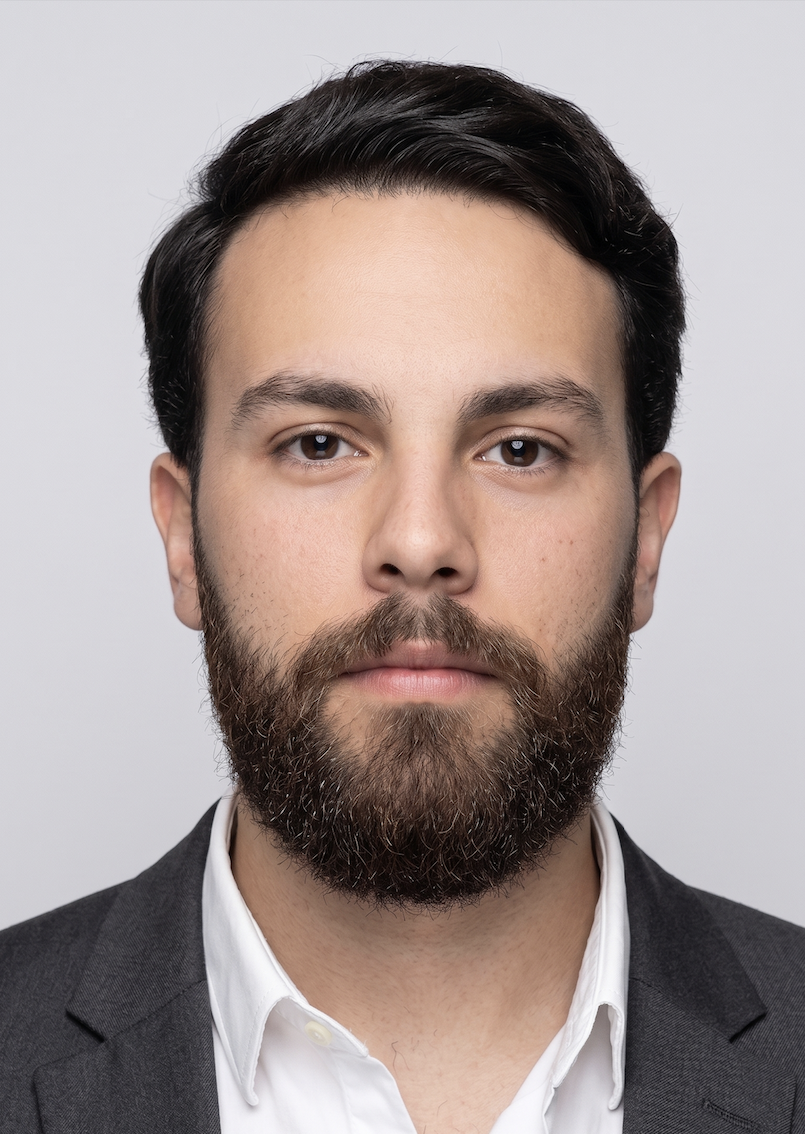
Moustafa Laymouna
is a fourth-year PhD candidate in Family Medicine and Primary Care at McGill University. He completed his medical degree in Egypt and an MSc in Family Medicine at McGill with a focus on digital health. His doctoral research focuses on rapid antiretroviral therapy initiation among migrants, integrating evidence from clinical guidelines and real-world practice to generate practical solutions that advance patient-centred care and reduce health disparities.