
PAs could be the solution to global health's physician shortage: yet MSF won't take us
CC BY-NC-SA 2.0
By Erica Prager
It wasn't until I was sitting in a crowded McGill classroom listening to the ardent and animated Dr. Madhukar Pai introduce Sana Bég, the executive director of MSF Canada, also known as Doctors Without Borders, that I truly believed in myself to make an impact globally. Like many students, my bubble included my own problems: an upcoming exam, personal health struggles, my sick grandmother whom I cared for, and dealing with the daily chaos of a 6-membered cultural blend of a family. In that crowded McGill classroom, that bubble popped. Though I knew about issues in global health, nothing is quite as confronting as seeing the lack of access to care, hospitals and healthcare workers being bombed, and queer people being excluded from life-saving HIV care. As the child of an immigrant who defected from the USSR and came to Canada for refuge, I have been sheltered and offered opportunities that I never would have otherwise had; these are opportunities made possible in part by my position as a settler on Indigenous land. As a healthcare professional in training, it will soon be time for me to take this opportunity, and use it to help patients all over the world. Here's the problem: MSF doesn't want me.
The role of a physician assistant (PA) is often tricky to explain. While highly established in other countries like the U.K. and the U.S., in Canada the role is relatively new. Simply put, a PA is trained under the medical model for 2+ years, rather than 4+, and has a similar scope of practice to their supervising physician. That means PAs see and treat patients, assist in surgery, prescribe, and do procedures. PAs can be found across many specialties, from family practice and emergency medicine, to neurosurgery and infectious diseases. The history of PAs is even more interesting. Leaders of Global South countries like Ethiopia, Fiji, Ghana, Iran, Kenya, Papua New Guinea and Sri Lanka invented similar models prior to the emergence of PAs in the U.S. and Liberia in the 1960s. However, despite this long and diverse history, PAs remain generally unimplemented within the sphere of global crisis relief. In 2026, PAs are still not a position employed by MSF, despite their presence in many countries wherein MSF is deployed.
PAs have been shown to be a vital tool in addressing the global physician shortage by reducing the healthcare gap and increasing access to care in over 50 countries. An estimated 4.6 billion people – or more than half of the world’s population – are without access to medical care, and there is an estimated shortage of 11 million healthcare workers. The MSF themselves cite a shortage of staff as being a contributor to patient death, yet their hiring opportunities are limited to physicians, nurses, and midwives.
As a PA student in training at the University of Toronto, I have longed to contribute to global health and MSF, yet I fail to see how this would be possible. MSF needs PAs, but doesn’t want them. Despite the implementations of PAs across the globe, from Liberia to Canada, Ghana and beyond, organizations like MSF have fallen short of realising the full potential of PAs and how they can contribute to global care in underserviced areas. If the future of global health lies solely on the backs of physicians and nurses, isn’t it time to lighten the load?
Dearest MSF, the future of patient care relies on collaboration; plenty of PAs have their stethoscopes at the ready, so let’s make it happen.
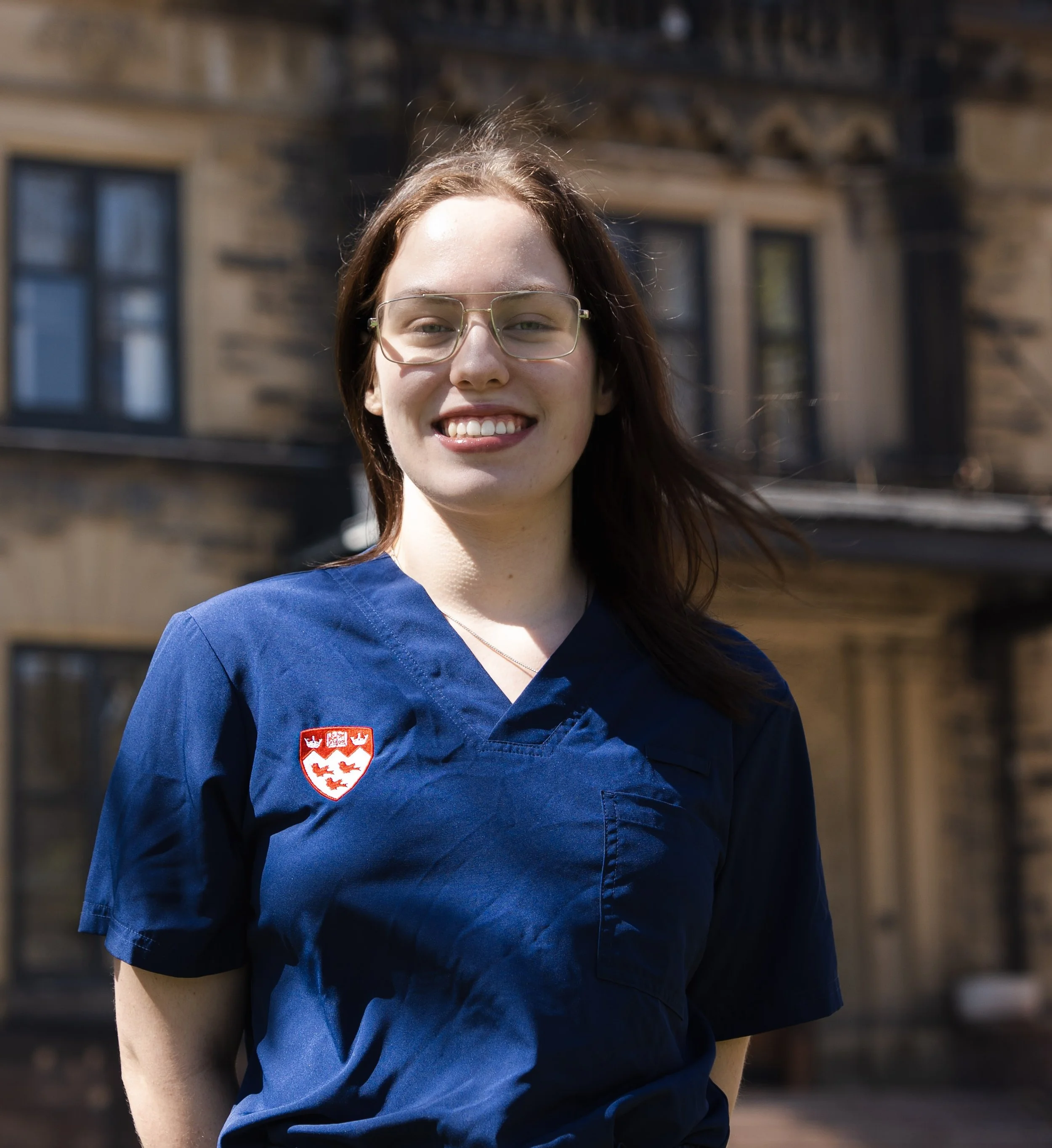
Erica Prager
is a first year Physician Assistant student at the University of Toronto, and a recent McGill graduate in Anatomy and Cell Biology. Erica has interests in orthopedic surgery, particularly in underserviced areas and in crisis relief. Erica would like to thank her mentors, Drs. Ananya Banerjee and Mette Coleman, for their impact on her understanding of global health and epidemiology as well as patient-centred care.