
From Public Health to National Security: Reframing Health Resilience in Germany

CC BY-NC 4.0
By Ahmet Bekisoglu
The conceptual architecture of German national security is undergoing its most profound transformation since the end of the Cold War. Traditionally, the Federal Republic viewed health policy through the prism of the Sozialstaat (social state), treating medical provision as a domestic pillar of welfare rather than a strategic asset of national defense. However, the convergence of the COVID-19 pandemic, Russia’s war of aggression against Ukraine, and a sophisticated landscape of hybrid threats has necessitated a fundamental pivot toward "Integrated Security". This evolution, formalizing health security as a central pillar of national resilience, marks the end of an era where healthcare was perceived as immune to the geopolitical shifts of the 21st century.
The primary argument for this reconceptualization lies in the systemic reality that in a globalized, hyper-connected world, health vulnerabilities are no longer merely humanitarian crises; they are strategic openings for adversarial exploitation. Germany’s National Security Strategy explicitly identifies pandemics and the disruption of medical supply chains as threats equal in gravity to conventional military aggression. To ensure the Wehrhaftigkeit (robustness) of the German state, health security must be integrated into a "whole-of-government" framework. Yet, this shift carries profound risks, most notably the potential "securitization" of health, which could undermine democratic transparency and the equitable distribution of resources.
Health Security After COVID-19: Structural Weaknesses
The pandemic served as a brutal audit of the German healthcare system, exposing fissures in a model long celebrated for its high expenditure. While Germany’s initial response was lauded for its intensive care unit (ICU) capacity, the subsequent stages revealed deep-seated coordination failures rooted in the constitutional logic of German federalism and the corporatist structure of its health insurance system. The strict separation of planning responsibilities - where the Länder (federal states) oversee hospital capacity while regional associations manage outpatient care - created a "governance friction" that hindered rapid, unified action during the crisis.
One of the most significant failures was the inability to maintain and execute pandemic preparedness plans. Despite existing strategies, stockpiling provisions for personal protective equipment (PPE) and essential medicines were not diligently followed, leaving the state vulnerable to "just-in-time" supply chain collapses. This fragility was compounded by a decades-long neglect of local public health authorities (Gesundheitsämter), which were chronically understaffed and lacked the digital infrastructure to communicate seamlessly with federal agencies like the Robert Koch Institute (RKI).
The crisis also highlighted a "cultural loss of vision" within the public healthcare sector. As hospitals were pushed to the edge of financial collapse by economic stagnation and inflation, the political response often focused on management of slogans rather than the restoration of professional autonomy. By late 2024, nearly 89% of public facilities in Germany were facing serious financial distress. This fiscal fragility is not merely an economic issue; it is a security vulnerability that limits the system's ability to pivot toward surge capacity in the event of a national emergency.
Expanding the Threat Landscape
In the wake of the Zeitenwende, the threat landscape facing Germany has evolved from "natural" epidemiological risks to "man-made" hybrid threats where health systems are intentional targets. The integration of health into the national security conversation is a recognition that a paralyzed hospital network or a demoralized population is as strategically significant as a compromised power grid.
The healthcare sector is now a prime target for state-sponsored Advanced Persistent Threat (APT) groups and criminal syndicates. In 2024, cyber damages in Germany reached a record high of 178.6 billion Euros, with the healthcare sector increasingly in the crosshairs. The vulnerability arises from the growing convergence of Information Technology (IT) and Operational Technology (OT), such as the Internet of Medical Things (IoMT). Many hospitals continue to rely on "end-of-life" technologies that cannot be patched securely, creating easy entry points for ransomware.
Health security is also being undermined by sophisticated "Foreign Information Manipulation and Interference" (FIMI). Adversarial actors exploit existing societal divisions - such as the Querdenken movement - to spread conspiracy theories that degrade the legitimacy of the German state. The "Doppelganger" campaign, attributed to Russian influence agencies, cloned legitimate German news websites like Bild and Spiegel to disseminate fake articles about the failure of the German healthcare system. These narratives often suggest that the government prioritizes foreign aid over the healthcare needs of German citizens, directly eroding institutional trust.
Emerging Responses: KRITIS and Medic Quadriga
The German government has responded to this expanding threat landscape with a series of legislative and operational measures designed to foster "Integrated Security". Central to this is the implementation of the EU’s NIS2 Directive and the passage of the KRITIS-Dachgesetz (Critical Facilities Act).
The KRITIS-Dachgesetz, which entered into force on March 17, 2026, shifts the focus to physical and organizational resilience against "all-hazards," including natural disasters, sabotage, and terrorist attacks. Operators of critical infrastructure, including hospitals, must now conduct risk analyses every four years and develop comprehensive resilience frameworks that cover governance and incident handling. This legislation represents a paradigm shift from purely digital security to a holistic protection of the "rescue chain".
Perhaps the most visible sign of the reconceptualization of health security is the "Medic Quadriga 2026" exercise, the largest medical service exercise conducted by the Bundeswehr in decades, occurring throughout February and March 2026. This exercise specifically tests the "rescue chain" from a realistic operational area in Lithuania back to German hospitals, emphasizing the seamless handover of casualties from military units to civilian healthcare providers.
The exercise used a "Temporary Reception Point" (hub) at Berlin Brandenburg Airport (BER) to practice triage and distribute patient loads that could reach 1,000 wounded per day in a national defense scenario. Coordination is carried out in close cooperation with the states of Berlin and Brandenburg, as well as civilian aid organizations like the German Red Cross. This model of civil-military cooperation is seen as essential for the sustainability and endurance of the armed forces, ensuring that medical care is a critical factor for "warfighting capability and survivability".
The Risks of Securitizing Health
While the conceptualization of health as a security pillar provides necessary resources, it introduces profound risks of "securitization" - a process that can distort the core missions of the health sector. Critics argue that viewing health through a "national security" lens risks prioritizing state-centric objectives over the well-being of the broader population.
Health experts express concern that the "militarization" of health could undermine the political neutrality of healthcare providers. In conflict zones, if medical teams are perceived as part of a state’s "integrated security" apparatus, they may lose the protection afforded to neutral humanitarian actors.
Furthermore, the shift toward security-driven governance can lead to an erosion of professional autonomy for healthcare workers. When health is managed through spreadsheets and slogans by centralized security agencies, the link between diagnosis and therapy can be lost to bureaucratic "efficiency". This contributes to the moral and existential crisis of a workforce already facing 35,000 vacant nursing positions and a deficit of 15,000 physicians.
Policy Implications and Conclusion
Germany stands at a crossroads where the passive provision of healthcare is no longer sufficient to guarantee state stability. Reconceptualizing health security as a pillar of national resilience is an essential adaptation to a world of "polycrisis" and hybrid threats. However, this transformation must be guided by principles of transparency and equity to mitigate the risks of over-securitization.
First, the federal government must break institutional silos. The creation of the Central Office for the Detection of Foreign Information Manipulation (ZEAM) in 2024 was a positive step, but it must be followed by more robust, cross-ministerial bodies tasked with managing the cyber-physical vulnerabilities of the health supply chain. Second, funding for "readiness" must be treated as a public good. The hospital reform’s transition toward "Vorhaltevergütung" (provision funding) must be fully realized to stabilize facilities in rural areas, ensuring they can pivot toward surge capacity during emergencies.
Finally, legal reforms must be accelerated to allow for more flexible task-shifting and professional delegation, empowering the workforce with the autonomy needed in times of crisis. By integrating health into the core of national resilience, Germany can better protect its citizens from the invisible fronts of hybrid conflict, provided it does not lose sight of the humanitarian principles that make the system worth defending. Health security must be understood as a combination of technical, social, and political resilience.
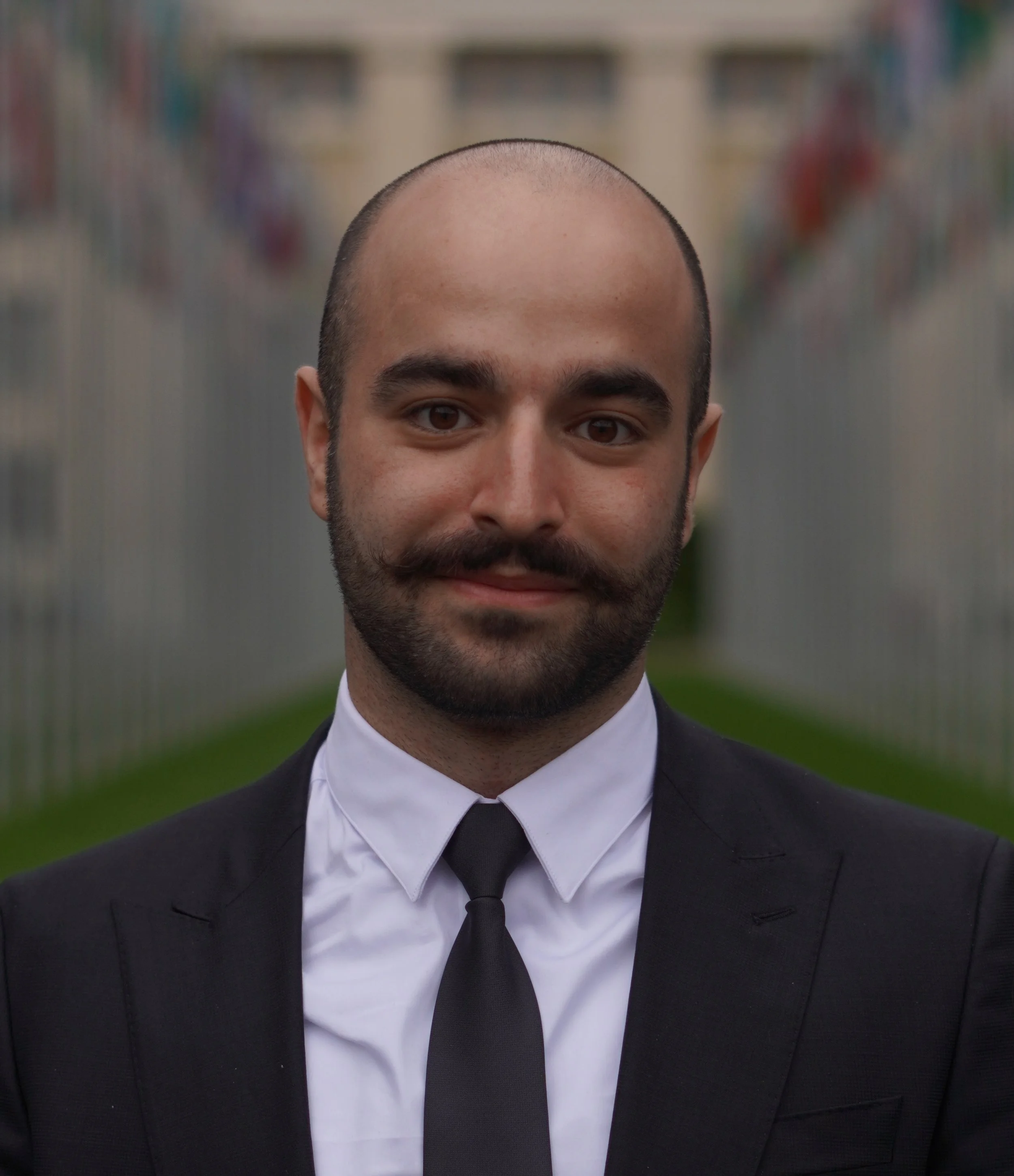
Ahmet Bekisoglu
is a physician and researcher specializing in global health policy, with a focus on health security, conflict, and mental health. He holds a medical degree from the University of Cologne. His work spans research, policy engagement, and writing, with publications in outlets such as Think Global Health and Polis180. He is particularly interested in how conflict and political structures shape health systems and outcomes.