
Reimagining Global Health: Reflections from a Transformative Learning Journey

Creative Commons Zero (CC0) license
Dr. Bello Olakeu Abdussalam
From 8th – 12th June 2026, I had the privilege of participating in the 3rd Reimagining Global Health Course at McGill Summer Institute of Global Health. While I anticipated learning about current debates in global health, the course ultimately challenged me to rethink some of the fundamental assumptions that shape how we understand power, knowledge, leadership, and justice in global health.
As a medical doctor and global health advocate from Nigeria, many of the issues discussed resonated deeply with both my personal and professional experiences. The course moved beyond traditional discussions of diseases, interventions, and health systems. Instead, it invited participants to critically examine the structures that determine whose voices are heard, whose knowledge is valued, and who gets to shape the future of global health.
One of the most impactful lessons for me was the discussion on power asymmetries and aid dependency. For decades, many low- and middle-income countries have relied heavily on external funding to sustain critical health programs. While such support has undoubtedly saved lives, the conversations throughout the course highlighted how dependency can sometimes undermine local ownership, innovation, and sustainability. These discussions reinforced my belief that achieving health equity requires more than financial resources; it requires shifting decision-making power to the communities and countries most affected by health challenges.
The sessions on decolonizing global health and "The Foreign Gaze" were equally thought-provoking. They challenged participants to reflect on how global health narratives are often shaped by institutions, researchers, and funders far removed from the realities of the communities they seek to serve. As someone who has worked extensively in community-led TB advocacy and youth engagement, I found myself reflecting on how often local expertise and lived experience remain undervalued despite being essential for effective and sustainable solutions.
Another theme that strongly resonated with me was the growing call for Global South leadership. Rather than viewing the Global South primarily as a recipient of aid or implementation site for externally designed programs, the course emphasized the importance of recognizing the Global South as a source of innovation, leadership, and knowledge generation. This perspective aligns closely with my own vision of contributing to global health through research, policy development, and advocacy that is grounded in local realities while influencing global conversations.
The discussions on mentorship, ethics, disability justice, anti-Blackness, human rights, and implementation science further expanded my understanding of equity in global health. These sessions reminded me that health inequities are rarely isolated from broader social, political, and historical forces. Addressing them requires interdisciplinary approaches and a commitment to justice that extends beyond healthcare systems alone.
Perhaps the most inspiring aspect of the course was its emphasis on imagination. Throughout the week, speakers encouraged participants not only to critique existing systems but also to imagine alternatives. This focus on cultivating imagination and solution spaces reminded me that meaningful change begins with the courage to envision a different future. Reimagining global health is not merely about reforming institutions; it is about creating new possibilities for partnership, solidarity, and shared leadership.
As the course concludes, I leave with a renewed sense of purpose and responsibility. I am inspired to continue advancing community-centered approaches, strengthening Global South leadership, and contributing to evidence generation that informs equitable health policies and practices. More importantly, I leave with a deeper appreciation that the future of global health will depend not only on scientific innovation but also on our collective willingness to challenge existing power structures and imagine more just and inclusive alternatives.
The Reimagining Global Health Course was more than a learning experience; it was an invitation to rethink, reimagine, and ultimately reshape the future of global health. It is an invitation I intend to carry forward in my work, research, and advocacy.
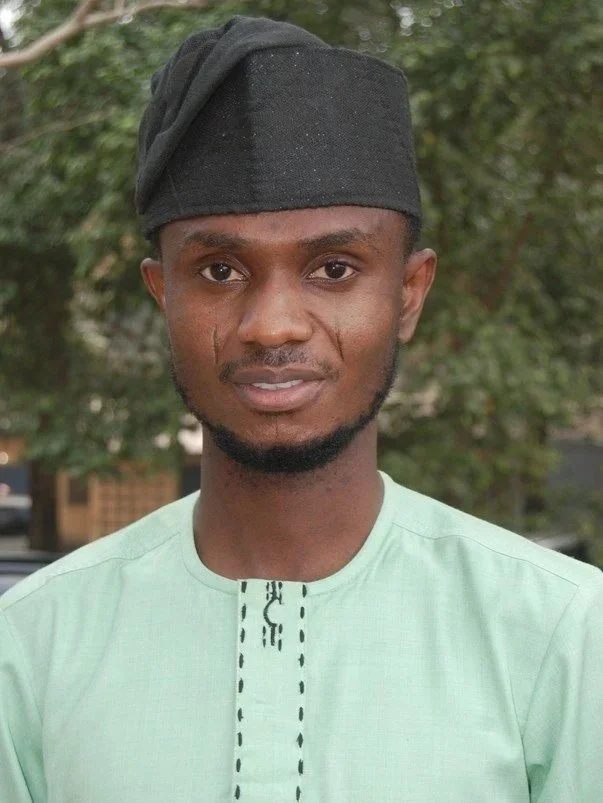
Dr. Bello Olakeu Abdussalam
is a medical doctor and global health advocate with expertise in infectious diseases, health systems strengthening, community engagement, and global health policy. He serves in several global leadership and advisory roles advancing equitable access to healthcare and meaningful youth engagement in health decision-making. His work spans research, policy advocacy, implementation science, and capacity strengthening across low- and middle-income countries. He is passionate about reimagining global health through locally led solutions, equitable partnerships, and inclusive governance.