Doing Research Differently: A Conversation with Dr. Ananya Tina Banerjee
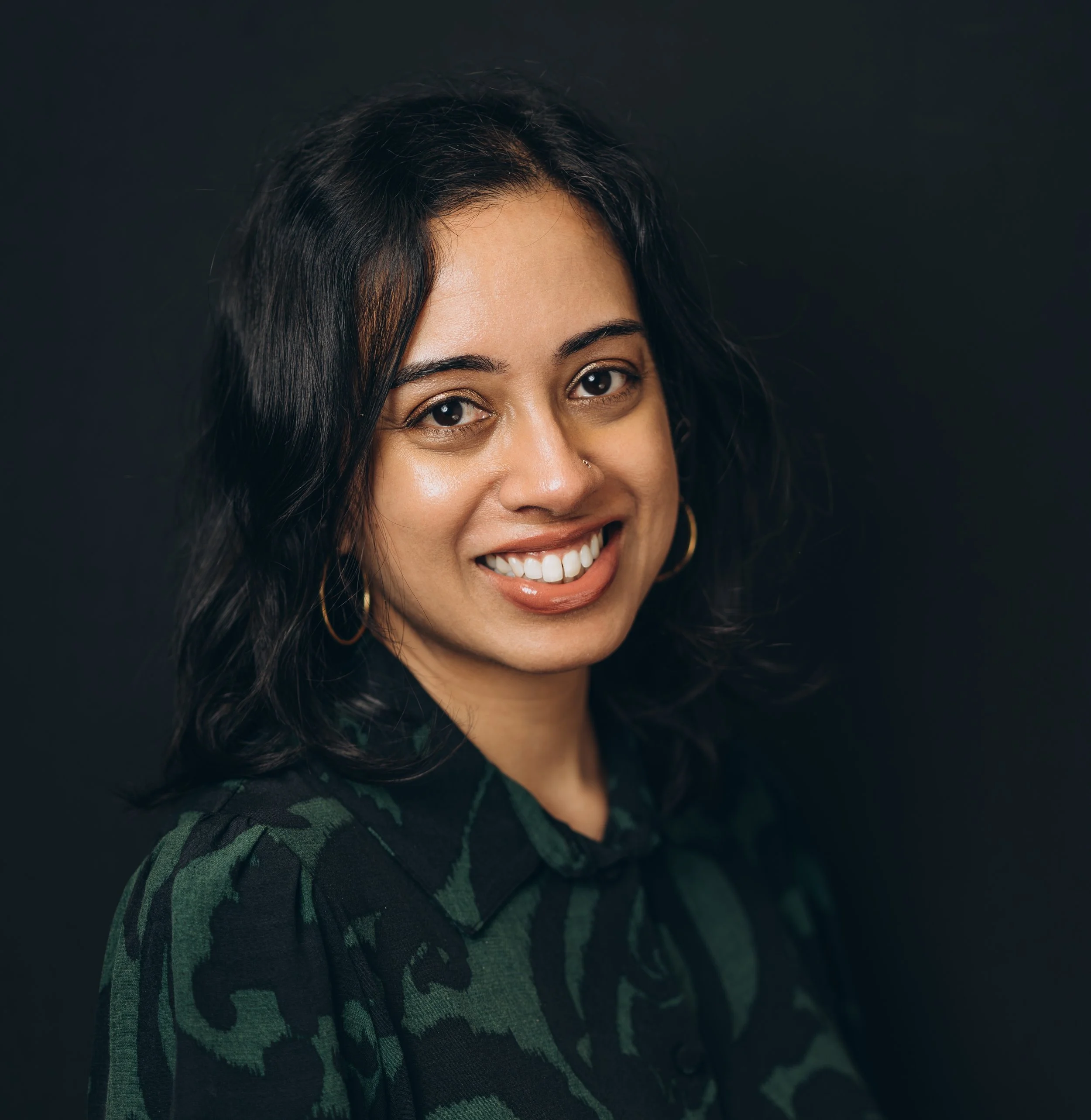
Dr. Ananya Tina Banerjee
Photo provided courtesy of Dr. Ananya Tina Banerjee
By Kanako Isobe
People's lived experiences shape how they understand the world, and research is no exception. For Indigenous, racialized, and marginalized populations, being studied rather than heard is a familiar dynamic. During my undergraduate studies in global health, I noticed that many lead researchers were white men, which made me question whether they truly understood the lived realities of the communities they were studying. This idea was further reinforced by my own experiences of discrimination and sexism as an athlete in a male-dominated sport. These experiences created a hesitancy to enter research myself, but also a deep curiosity about different approaches and methods in research that do things differently.
It was during my undergraduate degree that I first encountered participatory research through a course on ecosystem approaches to health and wellbeing, taken at a university campus in Costa Rica. The course placed a heavy emphasis on collaboration with community leaders as a way of genuinely understanding the research environment. Through several guest lecturers throughout the course, I began to understand how much damage research can do to communities when it is not done with good intentions. At the same time, I became convinced that another way was possible: a method genuinely designed for the good of the community and the affected population. That method was participatory research.
At its core, participatory research engages community members as active partners throughout the entire research process — from identifying the problem and developing the research question all the way to sharing the results (Duea et al., 2022). Rather than treating communities as subjects to be studied, it recognizes the value of each person's knowledge and lived experience in building understanding together. This shift in who holds power in the research process is what sets participatory research apart and what drew me to learn more. It is what ultimately led me to Dr. Ananya Tina Banerjee, an Assistant Professor in McGill University's Department of Epidemiology, Biostatistics and Occupational Health, whose work is deeply grounded in community-based participatory research with racialized communities.
I had the privilege of interviewing Dr. Banerjee to discuss her experiences with participatory research in practice and what it truly means to conduct research that serves the people it is meant to help.
Your work emphasizes community-based participatory research with racialized and marginalized communities. How did you come to apply a participatory approach in your own research journey?
As a racialized woman, I have my own experiences of marginalization, while also holding a lot of privilege. This work really began during my master's at the University of Toronto, where I was seeing a lot of research on South Asian communities experiencing high rates of diabetes. Many of the narratives were quite pathologizing, full of blame and shame. A conversation with my father, who has diabetes and a background in engineering, made it clear: when research is done in our communities, there is very little engagement with our own stories and perspectives. As I began working with community leaders and health agencies, they too expressed frustration, feeling that academics would parachute in, collect data, and leave, with only the institution benefiting. The research on South Asian communities kept growing, yet diabetes rates kept rising. I realized that communities needed to be genuinely engaged and to own the work, because they are the ones who will carry it forward long after academics have moved on.
What differentiates research that is genuinely participatory from projects that are merely consultative in name only?
There are vast differences. A lot of research done in a consultation fashion is, really, just about recruitment—getting access to community members to enroll in studies. Community organizations get very frustrated with this approach because they have no ownership, no role in co-designing the research question, and no involvement in data collection or analysis. Many report never seeing the data or the results again and often are not invited to review publications or listed as co-authors; they are only noted in the acknowledgements, if at all. Genuine participatory research is the opposite: communities are partners from the very beginning, helping define the question, choose the methods, interpret the findings, and communicate the results. When that happens, the work actually reaches health and social policy levels, and organizations are able to enhance their services for their communities because researchers are never at the forefront.
What challenges have you faced implementing participatory methods within traditional academic structures, and how have you navigated them?
My biggest frustration is that many researchers approach me simply to gain access to my community partners, not to build genuine relationships. The community partners I work with have been very clear: they will not collaborate unless researchers take the time to build trust and learn to do research the right way. Beyond that, community leaders are often not recognized as experts in publications or presentations, despite the enormous time and effort they contribute. Funding is also a significant challenge. Community organizations are often limited to five to ten percent of a total budget, and they don't receive the credibility that academics do. I frame this as a matter of epistemic justice. That said, I do think things are improving; funding agencies like the Canadian Institutes of Health Research, are increasingly recognizing that ethical participatory research takes time. But in the current political climate, with declining interest in equity, diversity, and inclusion, many communities are now refusing to partner with researchers at all. We have a long way to go. Ultimately, institutions need to create pathways for communities to access research funds directly and invite academics to partner with them, not the other way around.
Your work bridges social epidemiology with qualitative and community-based methods. How do you decide when quantitative approaches are insufficient on their own?
I always believe that quantitative findings must go back to the communities being studied, especially those where health disparities were discovered. Quantitative research itself has a history of harm, and frameworks like OCAP from Indigenous communities and EGAP from Black communities remind us that data governance and ownership matter. As an example, many studies continue to show that South Asians have the highest prevalence of diabetes and interpret this as a result of culture and lifestyle choices. But when you bring those findings back to low-income South Asian communities, they will tell you it is about food insecurity, neighborhoods not conducive to physical activity, stress from immigration, precarious work, and lack of health benefits. Quantitative data tells us what is happening; qualitative research tells us why. That is why I am a strong advocate for mixed methods, because qualitative approaches enable communities to raise their voices, drive the narrative, and identify the solutions they actually need.
Do you see participatory approaches being underutilized, and where do you think they could have the greatest impact?
More and more people are doing participatory research now. The people doing the best participatory research are often grassroots organizations and civil societies. One of the core challenges is that the value of participatory research is simply not being taught to students. I was not taught about it; I learned from communities. We need to revolutionize public health and global health education by offering courses on true community engagement and participatory approaches, and those courses should not only be taught by academics, but by community leaders who have lived experience of what genuine partnership means. Participatory research is too often confused with consultation. It should be longitudinal, not just project-by-project, and driven by the questions communities themselves identify as most urgent, not the assumptions of academics chasing funding or career advancement.
For students hoping to work at the intersection of global health equity and participatory research, what skills and experiences are most important to develop early?
Students need a solid foundation in intersectionality, power and privilege, and epistemic justice. They need strong skills in mixed-methods research, not just the quantitative approaches that dominate the field, but also in qualitative methods. Exposure to concepts like cultural safety, humility, and decolonization is essential because the research system itself is colonial, extractive, and exploitative. Students also need to understand the history of harm in global and public health research. At the same time, we need to take a strengths-based lens. There is incredible research done on the Global South, for the Global South, by the Global South, and those models deserve far more space in our curricula. Too often, our curricula still carry the assumption that Global South countries do not know how to do research, which I would strongly argue against. Through my work on advisory boards for institutions like the Gates Foundation and the Wellcome Trust, I have been amazed by the powerful mixed-methods and participatory work being done by research institutes and organizations in the Global South: work rooted in advocacy and activism that is actually shifting policy. That brings me to another skill students need to develop: advocacy. I do not believe our role as researchers is separate from being advocates and activists. In academic institutions, we are often taught just to conduct research and hope that policy picks it up. I disagree. Students need to learn how to effectively use their research towards actual change. Finally, Indigenous methodologies must be a core part of the curriculum. Indigenous communities have always had it right on how to conduct ethically and morally sound research, and there are so much our students still have to learn from them. All of this, of course, depends on a fundamental shift in how global and public health programs are structured.
More about Dr. Ananya Tina Banerjee on the McGill Website.
Reference:
Duea, S. R., Zimmerman, E. B., Vaughn, L. M., Dias, S., & Harris, J. (2022). A guide to selecting participatory research methods based on project and partnership goals. Journal of Participatory Research Methods, 3(1). https://doi.org/10.35844/001c.32605

Kanako Isobe
is a first-year Master of Science in Public Health student with a bachelor’s degree in Global Health and years of experience in health promotion in recreational settings. She is passionate about advancing maternal and women’s health, especially in marginalized populations where women’s voices are often overlooked in health decision-making. Her interests center on developing culturally safe, community-driven approaches to surveillance and preventive care that promote health equity.