
In Conversation with La Maison Bleue
By Bridget Li
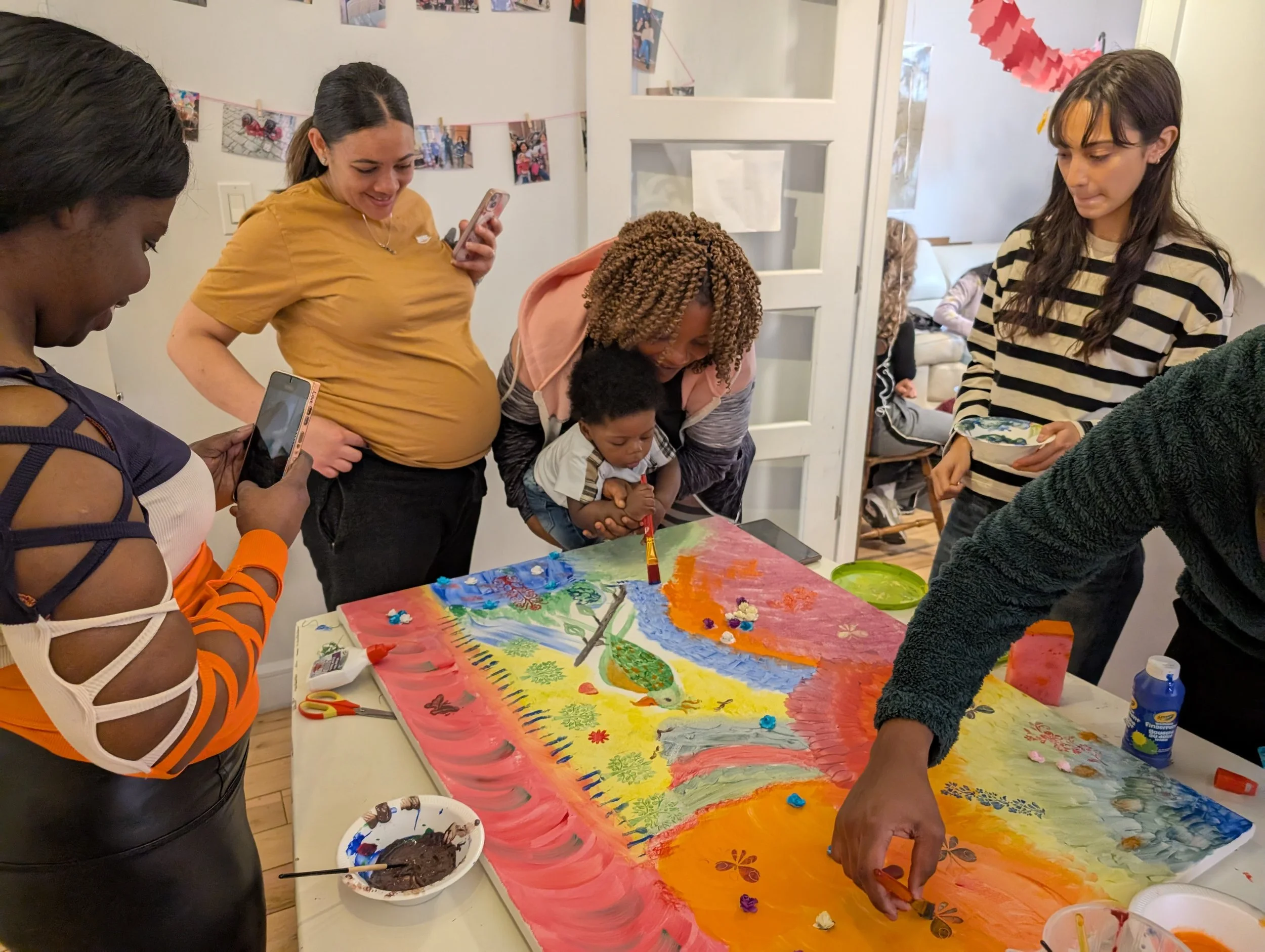
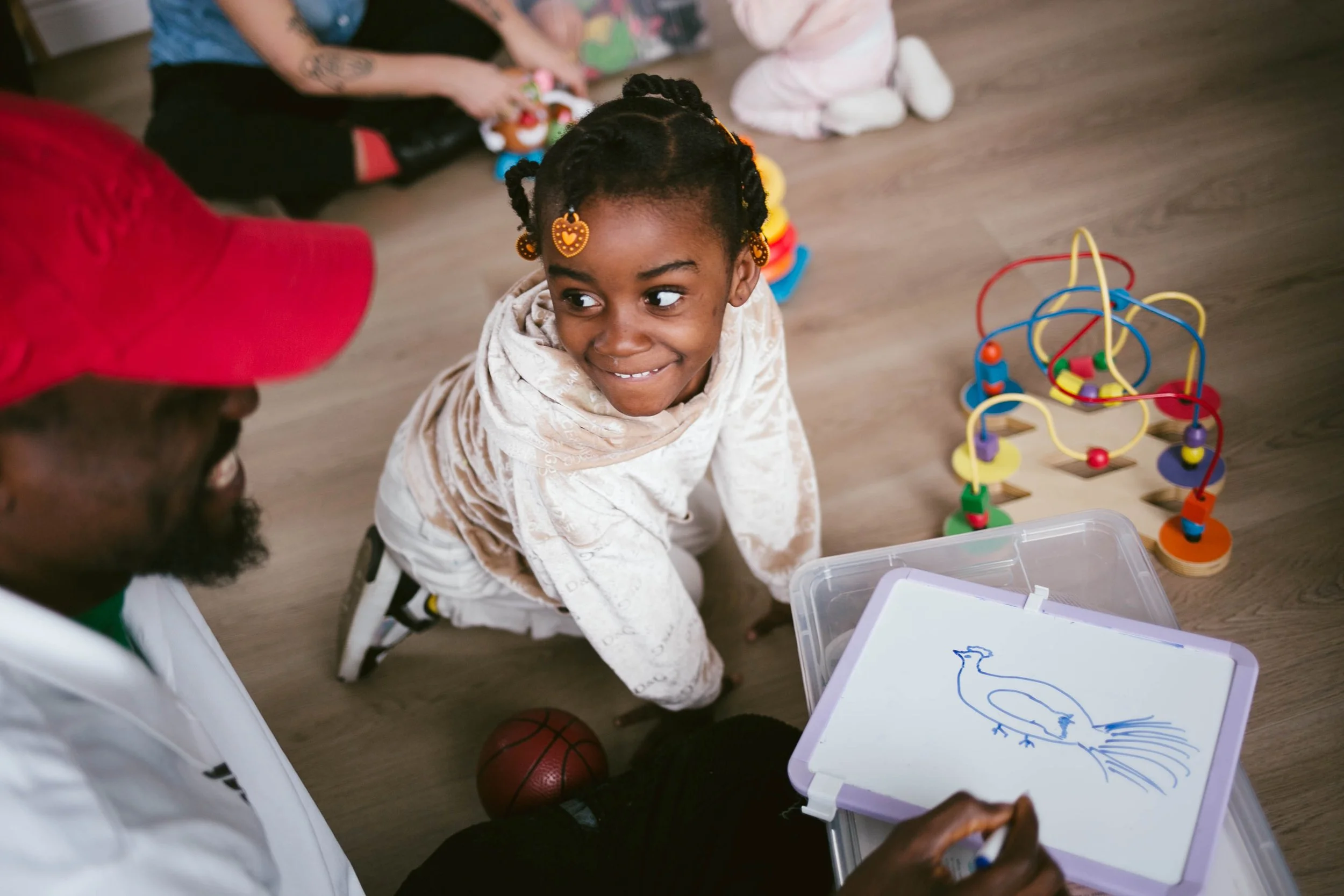
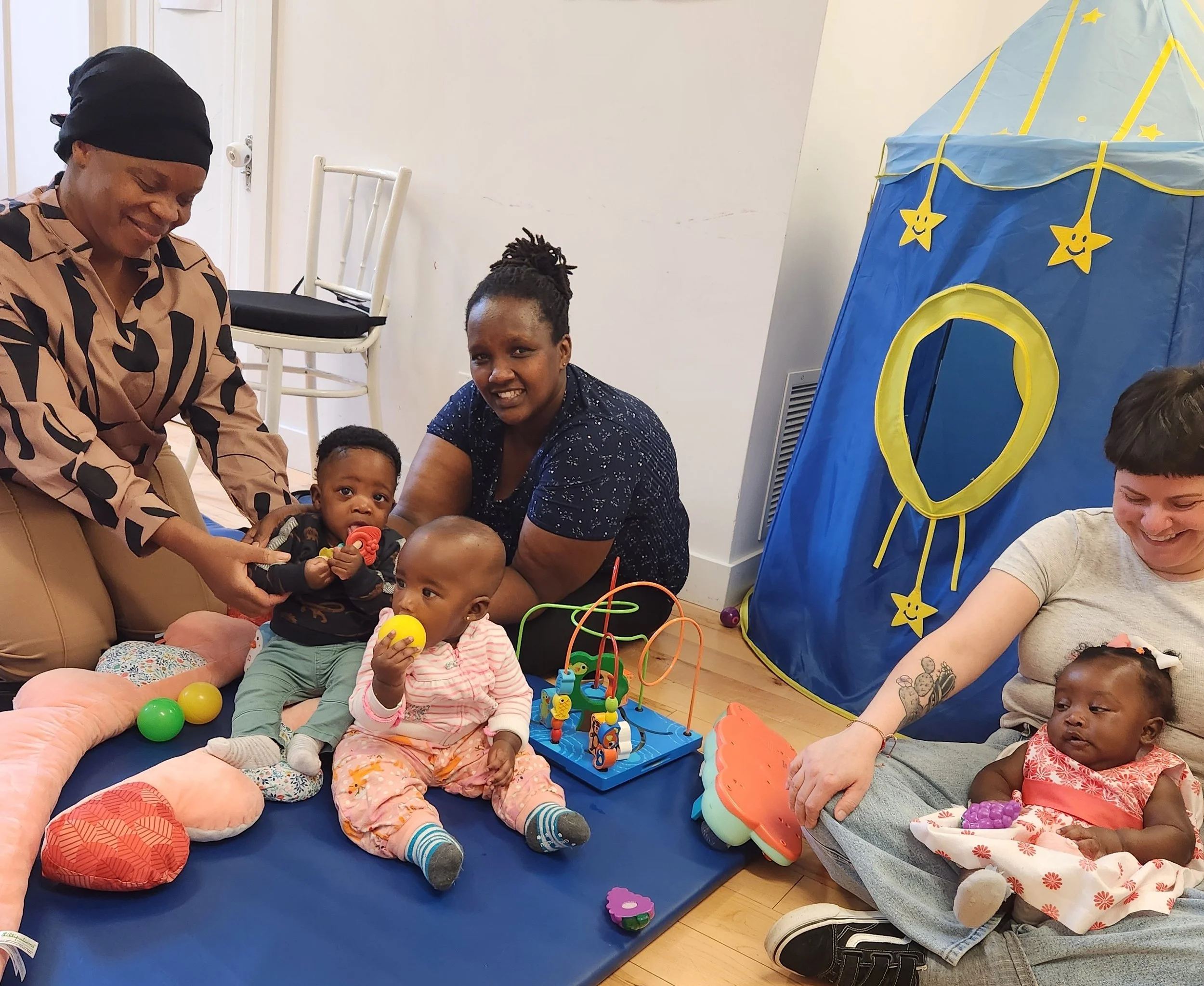
Last semester, I had the privilege of volunteering at La Maison Bleue (LMB), a social perinatal organization with five branches across Montreal. LMB works with at-risk pregnant women and families, with a mission to reduce social inequalities and promote optimal child development. During my time there, I saw this mission come to life: children meeting with psychoeducators to assess their learning development, mothers attending workshops on Canada’s immigration process, and families bonding in the waiting room. The organization does more than just provide healthcare and social services; it fosters a community, oftentimes for people who might otherwise lack one. I had the opportunity to ask questions about La Maison Bleue to Marie-Christine Harguindéguy-Lincourt, the centre’s director of quality and expertise. I am honoured to share their story.
B: What does your organization aim to achieve?
M-C: Our main goal is to reduce social inequities. That’s our raison d’être at La Maison Bleue. We help pregnant women and their families who live in contexts of vulnerability. Our mission is to reduce inequities that result from vulnerability and ultimately promote the optimal development of the child. We help children from their mother’s womb to the age of five. To do that, we use a social perinatal care approach: supporting the child’s development and health by addressing the main social determinants of health. The child is our goal.
B: Yes, when I started working with LMB, I was very impressed with the long-term interventions that you do. Because you prolong the connections with the families. It’s not just touch and go, helping them once, but staying in their lives and developing relationships and connections.
M-C: These families have a lot of needs, so being with them from pregnancy until their child turns five gives us an opportunity to target those needs. In fact, sometimes they have another child, so they’re with us for more than five years. To help these families, you can’t just say everything’s going to be fine in two months. So we are very lucky to have this time.
B: Montreal and the Côte-des-Neiges region have changed a lot since La Maison Bleue’s inception over 2 decades ago. How have your needs evolved with these changes?
M-C: The most important thing is that we need to adapt. As the city changes, the needs of the families change as well. They remain similar, but have increased in number and severity. We have a lot more needs, especially over the last few years, after the pandemic, with changes in migration law, etc. We need to adapt our services to respond accordingly, and we’ve done so through partnerships. We’ve always had partnerships at LMB, but we’ve needed to think more about them over the last few years. Another thing is that we’ve expanded to five locations across five neighbourhoods to offer services to more families.
B: Many of the families you work with face structural barriers, such as housing insecurity, migration status, poverty, or social isolation. How does La Maison Bleue address these broader determinants of health?
M-C: We’re very lucky to have interdisciplinary teams, where everybody plays a specific role. This way, we can meet the needs that are behind all these determinants of health. We have all kinds of professionals. We have midwives, nurses, and family physicians who help our pregnant mothers before and after their births. We also have social workers, psychoeducators, and lawyers.
It makes a big difference for our physician, because when he sees a family in his office, he can refer them to a member of our in-house team for help. We can afford to take the time and see what’s going on with housing, job searches and the immigration process because we have a variety of professionals.
What’s more is that our partnerships act as great referrals. We work with daycare centres and schools, other community organizations that help migrants, food banks, health and social services, etc. Obviously, we can’t do everything, so these partnerships allow us to expand our net and ensure that no one falls through the cracks.
B: What lessons from La Maison Bleue’s model could be scaled or integrated into public healthcare systems?
M-C: We ask ourselves this often. How can we scale up this model? What part of this model can be helpful for others? La Maison Bleue is part of the Québec CIUSSS (Centre intégré universitaire de santéet de services sociaux), but we offer services tailored to families’ situation. For instance, if a mother doesn’t have a phone or a family doesn’t answer due to a language barrier, we think of another way to offer our services.
In 2015, we had an evaluation of the organization, and they identified five key elements that make us successful in meeting familial needs. First is the proximity and approachability of our centres. Being a small, homey place in neighbourhoods where families live makes us more friendly. This accessibility is not always possible for other healthcare systems. But the principle is still achievable: how can we be closer to the family? How can we get to know them to meet their needs? Second, is the hybrid structure I was talking about. We are a nonprofit organization that brings in professionals, but we also work with the healthcare system to get nurses, social workers, physicians, etc. We have a unique partnership with Québec. Another one is being adaptable and flexible with how we address unique circumstances. Fourth is financing. In everyday life, you need money to have resources. If we’re constantly looking for money, we can’t focus on helping the families. Lastly, we have great partnerships with organizations within the neighbourhood who are in perinatal care or serve small children.
B: What are the biggest challenges you face as a community-based organization?
M-C: One of the challenges is the hybrid structure, which, ironically, is also one of our strengths. Having so many stakeholders, partnerships, and moving parts in the organization means that coordination and collaboration can be difficult at times. So it’s a challenge, but it’s a challenge we want to have. Another challenge is financing. We are always in need of more funding to support projects and initiatives.
B: Can you share some of the organization’s achievements or impacts that you’re most proud of?
M-C: There are two notable ones that are coming to mind. In 2023, we conducted a study to understand how families use our services, and the consequences that result from them. The findings were very interesting. For example, in the Montreal area, 7.1% of babies are born premature. At La Maison Bleue, it’s 5.7%. Similar statistics are emerging for low birth weights. We’ve been very proud to see that there’s a positive impact.
In a different way, we can see the impacts that we have on mothers and families. Sometimes mothers write and say, “you’ve helped me feel better”, “this is a safe space for me”, “I don’t feel any fear here”. These are things that we take for granted as people with privilege, but these emotions are big for these families. They’re feeling more empowered.
B: I feel the same way, I mean, as a volunteer, I see the way the kids are happy here, the way parents feel reassured by the staff. To close, how can Montreal citizens or the McGill community help in your mission?
M-C: McGill is already helping us! We have lots of partnerships! Professors do research here and the Medicine and Nursing faculties send us interns. For Montreal residents, there are lots of ways to help. Volunteering, donations, and attending our events are all ways to get involved! All these examples are ways you can give these families a voice and make them feel like they are part of our city.
B: Thank you so much!
I am very grateful to Marie-Christine Harguindéguy-Lincourt for taking the time for this conversation. Here are some links to get involved with La Maison Bleue:
https://maisonbleue.info/en/get-involved/
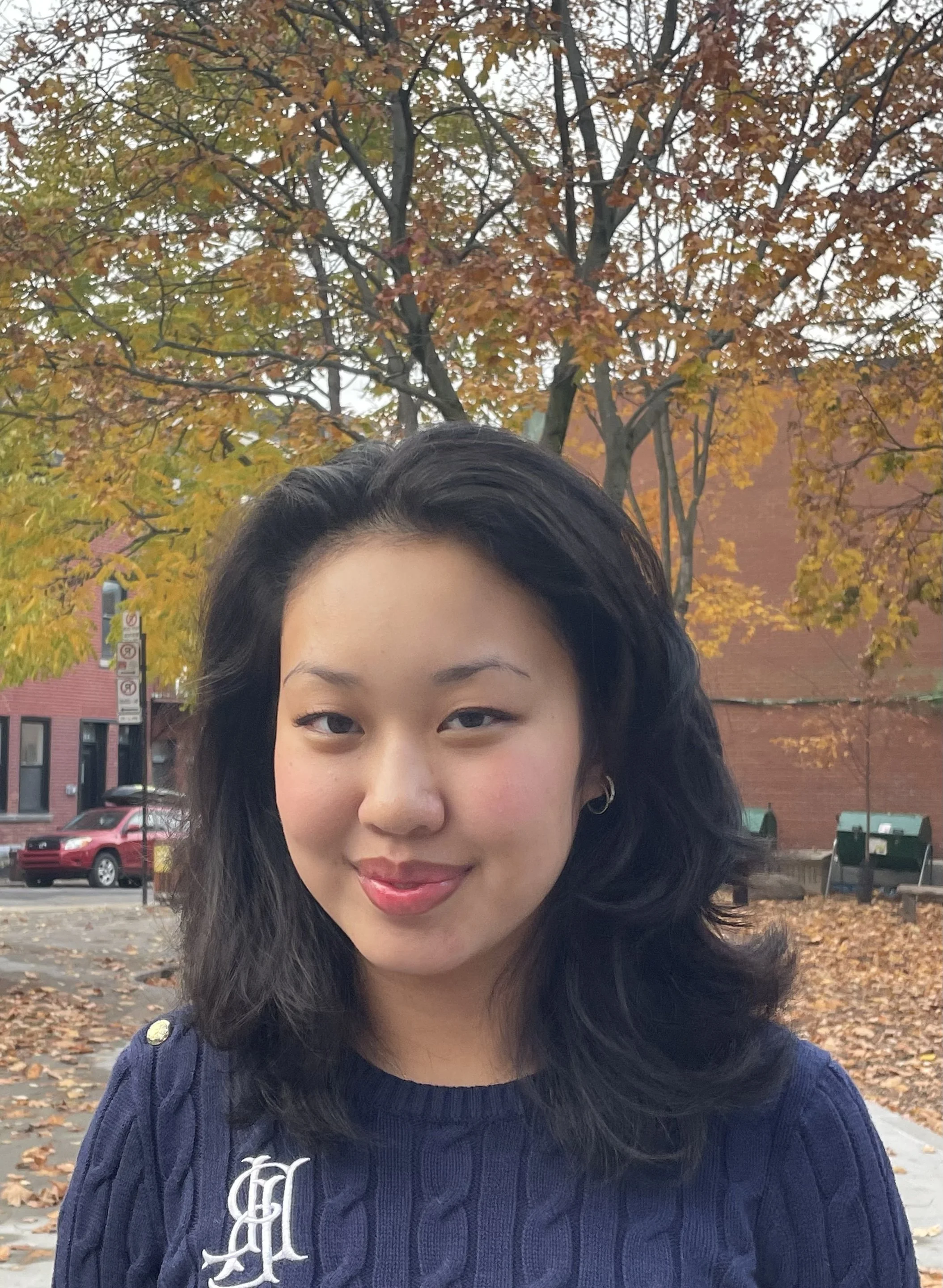
Bridget Li
is a third year, studying Chemistry and Polisci with a keen interest in health policy and systems. I am particularly interested in local health, SDOH and what accessibility looks like in Montreal. In my spare time, I love debating, going to new restaurants and listening to the newest pop girlie album.