
Malignancy in Academia: An Editorial on the Academic Hidden Curriculum of Dysfunction

Creative Commons License: 3.0 Unported
By Moustafa Laymouna
Almost ten years ago in Egypt, when I began medical school, I first encountered the term “malignant professor.” I remember feeling surprised that “malignancy” could refer to something other than cancer. As a naïve student stepping out of a small, closed community into a much larger one, I did not fully understand what people meant by this phrase. But slowly, the academic behaviour behind the metaphor began to take shape, and its early impact on my mental health became unmistakable. I couldn’t have known then how deeply it would affect me later, but I already sensed the subtle warning signs, and the need to find a way out before it was too late.
Academia is often idealized as a space of growth, curiosity, and knowledge creation. But glossy mission statements and institutional pride often mask a more uncomfortable reality: a silent curriculum of power, inequity, and waste (1). From medical school in Egypt, graduate training in Canada, and through the professional experiences, I have witnessed systems that differ in form but share common dysfunction. I have made mistakes. I remained silent, learned, and watched many others quietly endure the same.
This reflection editorial essay is not a complaint. It is a mulling over of what academia often refuses to say aloud, and a call for something more ethical, equitable, human, and genuinely supportive of intellectual growth. My reflections draw on lived experience, but they also reach beyond the personal, illuminating structural problems that undermine the good intentions of academia and mentorship, distort evaluation, and erode integrity. Through this reflection, I have come to recognize my own mentoring learning needs and what I must develop now to become the mentor I once needed.
Academic mentorship: guidance or gatekeeping?
Academic supervision is articulated in terms of mentoring, but in practice, it often functions as a power relationship (2,3). A PhD colleague captured the dynamic with painful clarity:
“My income and quality of life depended on my supervisor—the only person I knew when I moved here. What if I disagreed with him and he no longer wanted to supervise me? Would I be able to afford rent or stay in the country? No matter who the supervisor is, it’s a massive power dynamic.”
Students often enter academia expecting mentorship to be paired with genuine care and guidance. Instead, students are often met with a culture of gatekeeping. Supervisors pass on their workload to postdoctoral fellows and research associates with no training in supervision, leaving students drifting through bureaucratic limbo (3). The excuse is familiar: “I am too busy.” Yet, it is the students who pay the price, with their time, funding, opportunity, and well-being.
My colleague once said, “People call it a great learning opportunity, but you’re not learning so much as doing unpaid labor.” And it is true: many fellows, despite their expertise, lack of training in mentorship. Their own biases, inevitable in any environment, trickle down to the students they informally supervise.
This problem is magnified in large laboratories: the larger the lab, the smaller the mentorship. Highly self-directed students may thrive, but many others face neglect and burnout. Prestige can cloak toxicity. The higher up the supervisor’s status, the harder it becomes to critique the imbalance. On the other hand, small labs may lack resources limiting students’ ambitions.
Supervisors often curtail creativity under the name of “staying focused,” suppressing originality and critical thought (3). True mentorship should foster growth, not obedience. It should treat students as future colleagues, not subordinates. But, in reality, many students’ emotional and academic well-being rests on a supervisor’s mood, priorities, or politics. The saying “a PhD is like a marriage” is not a metaphor — it captures the entanglement of dependence, emotion, and vulnerability when this relationship goes bad.
Joining academia for the first time feels like arriving as a new kid on the block. You come with insecurities, fear of mistakes, fear of disappointing others. Everyone around you seems like an expert, and you feel anxiety about how your ideas will be received. These experiences made me realize that one of my core mentoring needs is understanding how power operates, including my own future power, and to use it ethically instead of unconsciously reproducing harm.
Power, authorship, and the politics of credit
Supervision extends beyond guidance and becomes entangled with issues of authorship, credit, and gatekeeping. Many students see their intellectual labour repackaged under somebody else’s name. Professors who offer minimal contribution often claim first or senior authorship, while honorary co-authorships are distributed for political convenience (4).
These are not harmless practices: they distort the record of contribution and silence emerging voices. “Where credit becomes currency, integrity becomes collateral.” I have heard these practices justified as “different academic cultures,” but this is a polite veneer over what is, in practice, academic corruption.
This raises a fundamental question of evaluation: how should a student be assessed when they have written or contributed substantially to multiple manuscripts, yet consistently appear only as a third or fourth author? Terms like bias and differences are too gentle — they sanitize a system that rewards hierarchy over merit.
The same logic rewards output over substance. Much of what is labelled “academic rigor” is, in reality, ritualized inefficiency. Theses and dissertations balloon with pages that few people will read, not due to a lack of skill, but because students are trained to prioritize volume over value.
A wise person once told me: “No one is going to read your thesis except me and a couple of others.” It was true. We decorate our shelves with unread dissertations while meaningful ideas fade into obscurity.
Academic publishing has also become a business: ranking people by publication counts and citations, spending money on article processing fees with little transparency, rewarding quantity over originality. Something about this system feels deeply wrong.
Meanwhile, innovative tools such as artificial intelligence (AI) are met with suspicion, as though efficiency threatens virtue. Used ethically, AI can support literature synthesis, analysis, and clarity, yet academia resists innovation in the name of purity.
These patterns taught me that authorship is not only a technical matter, but also ethical one. As a future mentor, I aim to learn how to initiate authorship conversations early, avoid ambiguity, and create transparent processes so my students never experience the confusion, invisibility, or erosion of confidence that I have seen. They also revealed another mentoring need: guiding students toward meaningful, efficient work, not ritualized academic performances that drain energy while adding little to knowledge.
Financial precarity and the cost of delay
Delays are never neutral in academia (5,6). When feedback takes months, or expectations shift without clear communication, students bear the cost, sacrificing time, funding, visa status, and mental health (5,6).
For international students, the stakes are even higher: they face restricted funding, limited employment opportunities, and the psychological burden of isolation (6). Some are urged to complete their degrees in unrealistically short timeframes; others are stretched over years without proper mentorship, graduating with debt and little preparation for employment.
Graduate school is supposed to build competence, confidence, and academic identity; when institutions fail to support growth, they do not produce scholars, they produce survivors (5,6).
Even so, I do not place all the blame on academia or supervision. Students also have a responsibility to advocate for themselves, because, in truth, “you do not get what you do not ask for.”
These experiences made me recognize another mentoring need: mentorship is not only intellectual labour, but also temporal and emotional labour. I need to provide timely feedback, set realistic timelines, and recognize how my decisions affect a student’s financial and emotional stability.
Transparency and fairness in funding
One of the most overlooked inequities in academia lies in the allocation of internal awards, fellowships, and teaching assistantships (TA). In many programs, TA positions are quietly given to a professor’s own students without open competition or transparent criteria. One single TA appointment can significantly influence a student’s CV, evaluation score, and future award eligibility.
Everything is connected. When evaluators access their own students with others and openly identifying them, bias is inevitable. Explanations for internal awards are often vague: Where are the rankings? Where are the scores? Transparent rejection letters cost no more words than unclear ones.
We are all human; we naturally drawn to those we know. But “when favoritism replaces fairness, academia loses its moral compass” (1).
These realizations made it clear that, as a mentor, I must learn how to evaluate fairly, justify decisions transparently, and resist the easy slide into favoritism. These are not innate traits but mentoring skills I must deliberately develop.
Treating the malignancy
A PhD or MSc is more than just a credential. It is a formative process that should cultivate confidence, intellectual courage, and a sense of belonging —not exhaustion, fear, or silence. When institutions privilege output over people, hierarchy over equity, and endurance over care, they normalize dysfunction under the guise of excellence.
Critique, however, must come with responsibility. Writing this reflection has forced me to examine not only what was lacking in the mentorship around me, but also what I must unlearn and deliberately develop to avoid reproducing the same patterns. Mentorship is not instinctive. It is a learned practice shaped by power, communication, and emotional labour. One lesson has stayed with me: “Clarity is the antidote to anxiety.” When clarity, alongside reciprocity and psychological safety, is absent, autonomy, confidence, and academic identity quietly erode.
Students, too, are not passive victims. We make strategic choices, sometimes remaining silent or staying too long in unhealthy environments because silence feels safer than loss. Even when exit is impossible, naming harm matters. Silence may offer individuals short-term protection, but it also sustains the systems we hope to change.
As a future mentor, I carry these lessons forward as obligations, not aspirations. I aim to communicate transparently, provide timely and constructive feedback, engage in explicit and ethical authorship conversations, navigate power without silencing others, and create space for ideas that do not originate from me. These are not technical skills. They are relational commitments.
My own academic development, shaped by precarity, friction, and learning through silence, will inevitably influence how I mentor. My goal is not to become the mentor I once feared or tolerated, but the mentor I once needed. If academia is to change, I must be willing to change myself.
This essay captures only a fraction of the dysfunctions embedded in academic life. Many remain beyond this word limit. It is also important to state clearly that my own graduate training has included the support of an exceptional supervisor who consistently models generosity, care, and intellectual safety, while remaining human and imperfect. This is not a complaint, but a hope. Academia and mentorship can more consistently reflect their best intentions and do less harm in the process.
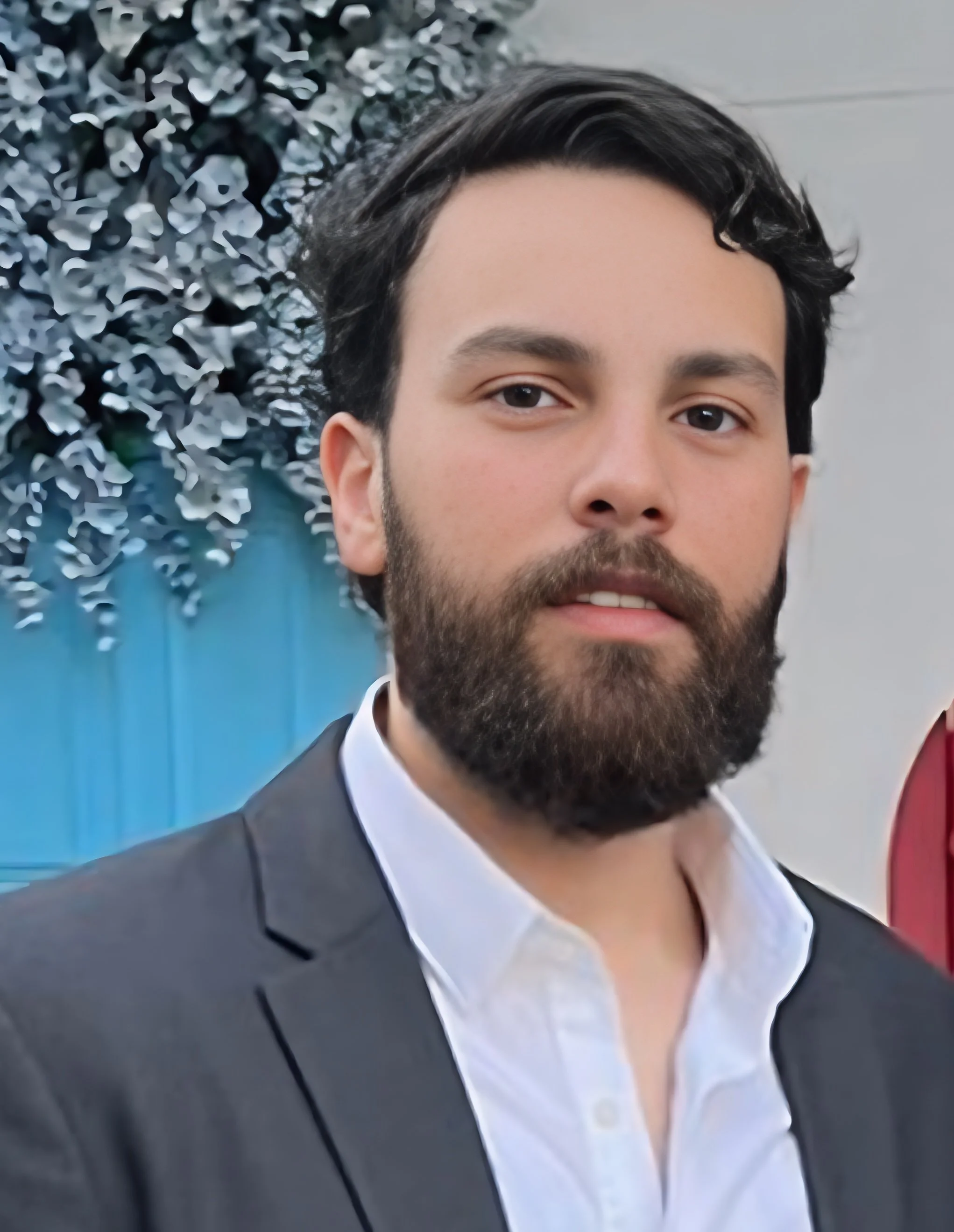
Moustafa Laymouna
is a third-year PhD candidate in Family Medicine and Primary Care at McGill University. He completed his medical degree in Egypt and an MSc in Family Medicine at McGill with a focus on digital health. His doctoral research focuses on rapid antiretroviral therapy initiation among migrants, integrating evidence from clinical guidelines and real-world practice to generate practical solutions that advance patient-centred care and reduce health disparities.